
Research explained
Generative engine optimization (GEO): what a Princeton study found
Why AI quotes one page and ignores another: the GEO study in plain language, with a 90-second video and a 3-step checklist.
~6 min read
Good fit if
You write content for a small business or brand and want to know, with evidence, what makes ChatGPT and other AI assistants quote a page.
Key takeaways
- Adding quotes, statistics and cited sources made pages 30 to 40% more visible in AI answers.
- Keyword stuffing did not help, and did slightly worse than no change on Perplexity.
- Citing sources helped lower-ranked pages most: the #5 Google result gained 115%, the #1 result lost 30%.
Watch the 90-second version
The whole article as one short story. The study details and how to apply it follow right below.
What is generative engine optimization (GEO)?
Generative engine optimization (GEO) is the practice of writing pages so AI assistants like ChatGPT, Perplexity and Google AI Overviews quote them when they answer a question. Classic SEO tries to rank a page in a list of links. GEO tries to get your words, your numbers and your name into the answer itself.
The term comes from a 2024 research paper by Princeton University and IIT Delhi, presented at KDD, one of the main data science conferences. It was the first large test of what actually makes AI answers pick one source over another.
The story: two bike shops, one question
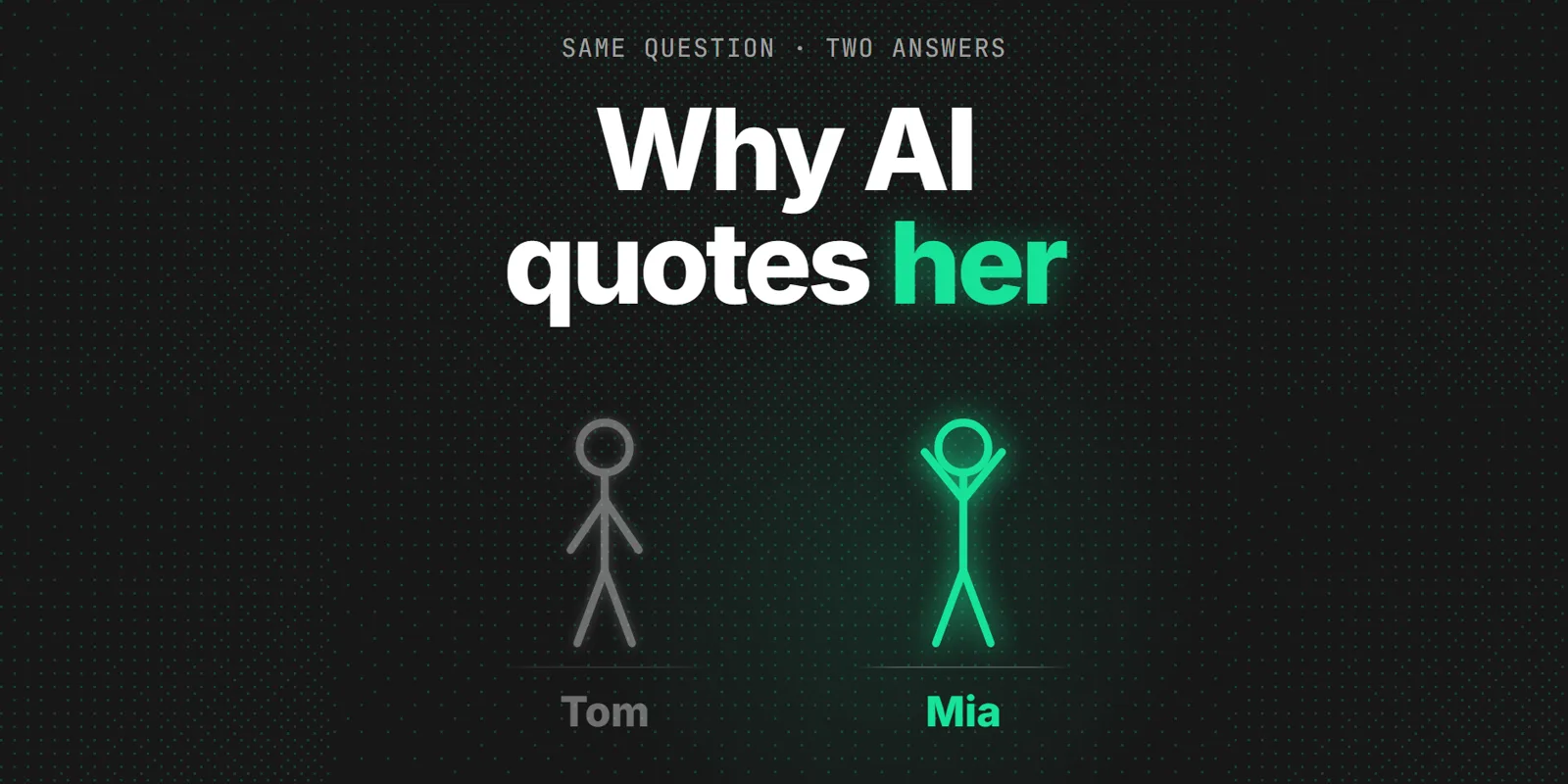
Tom and Mia both run a bike shop, and both wrote a page answering “How often should I service my bike?”
Tom did what SEO taught a lot of us: he repeated his keyword again and again. Mia did three other things. She added a quote from her mechanic, a real number (how many kilometres between services) and a source for it.
When a customer asked an AI assistant the same question, it quoted Mia. The customer booked with her. That is the whole idea of GEO in one example, and it is exactly what the study measured at scale.
What the researchers tested
The team built GEO-bench, a set of 10,000 search queries across many topics. For each query, they took the top 5 Google results, let an AI model (GPT-3.5) write an answer from them, and measured how much of the answer came from each page.
Then they rewrote one page at a time using different methods (keyword stuffing, adding quotations, adding statistics, citing sources, making the text more fluent or more technical, and others) and checked whether that page got quoted more. They repeated the key tests on Perplexity.ai, a real AI search engine, to confirm the results held outside the lab.
What made pages more visible in AI answers
Three changes stood out: adding quotes, adding statistics and citing sources. Keyword stuffing, the classic SEO reflex, did not help.
up to 40%
more visibility in AI answers from the best methods
30–40%
gain from quotes, statistics or cited sources
~10% worse
keyword stuffing vs. no change, tested on Perplexity
Visibility here means how much of the AI answer uses a page's content, weighted by where it appears in the answer.
The twist: it helps smaller sites most
The most surprising result is about who benefits. When pages cited their sources, the page ranked #5 on Google saw its visibility in AI answers rise by 115%, more than double. The page ranked #1 lost 30%.
In classic search, position one wins most clicks and it is hard to catch up. In AI answers, a smaller site with better evidence can be quoted ahead of the leader. That is good news if you are a local shop, a new brand or a niche expert.
How to apply it: 1 quote, 1 number, 1 source
You don't need new tools to start. On your next post or service page, add:
- One quote from someone real (your mechanic, a customer, an expert), word for word, with their name and role.
- One number you can back up: a price range, a duration, a result from your own work, with where it came from.
- One source: link the guide, study or official page you relied on.
Put them where the question is answered, not in a footer. And never invent any of them. A made-up quote or statistic can get repeated by AI under your name, and it breaks trust with readers the moment someone checks.
What the study doesn't prove
This is one study, run mostly in a research setup with GPT-3.5 in 2023, then checked on Perplexity. AI assistants change often, and results varied by topic: some methods helped more on factual questions, others on opinions or history.
Treat the numbers as direction, not a guarantee. The safest way to know what works for your site is to track the questions your buyers ask in AI assistants and see whether your pages start getting quoted.
Keep learning
Frequently asked questions
Short answers to phrasing people use in search and AI assistants.
- What is generative engine optimization (GEO)?
- GEO is the practice of writing pages so AI assistants like ChatGPT, Perplexity and Google AI Overviews quote them in their answers. The term comes from a 2024 Princeton and IIT Delhi study presented at KDD.
- Is GEO different from SEO?
- Yes, but they work together. SEO helps a page rank in a list of links. GEO helps the content of that page get quoted inside an AI answer. AI assistants often start from search results, so a page still needs to be crawlable and indexed.
- Does keyword stuffing work for AI search?
- No. In the GEO study, keyword stuffing did not improve visibility in AI answers, and on Perplexity it performed about 10% worse than leaving the page unchanged.
- What makes AI quote a page?
- In the study, three changes worked best: adding quotations from real people, adding statistics, and citing sources. Each improved visibility in AI answers by roughly 30 to 40%.
- Can I invent quotes or statistics to rank in AI answers?
- No. Only use quotes, numbers and sources you can back up. AI can repeat a made-up claim under your name, and readers lose trust as soon as someone checks it.
- How do I know if AI assistants quote my site?
- Ask the questions your buyers ask in ChatGPT, Perplexity and Google, in a private window, and note whether your site is named or cited. To do it at scale, an AI visibility tracker like Grenseo runs those questions daily.
Ship URL-grounded articles with AI citation tracking
Grenseo tracks your brand across ChatGPT, Claude, Gemini, and Perplexity, then drafts rankable articles from your product URLs so every publish stays verifiable.